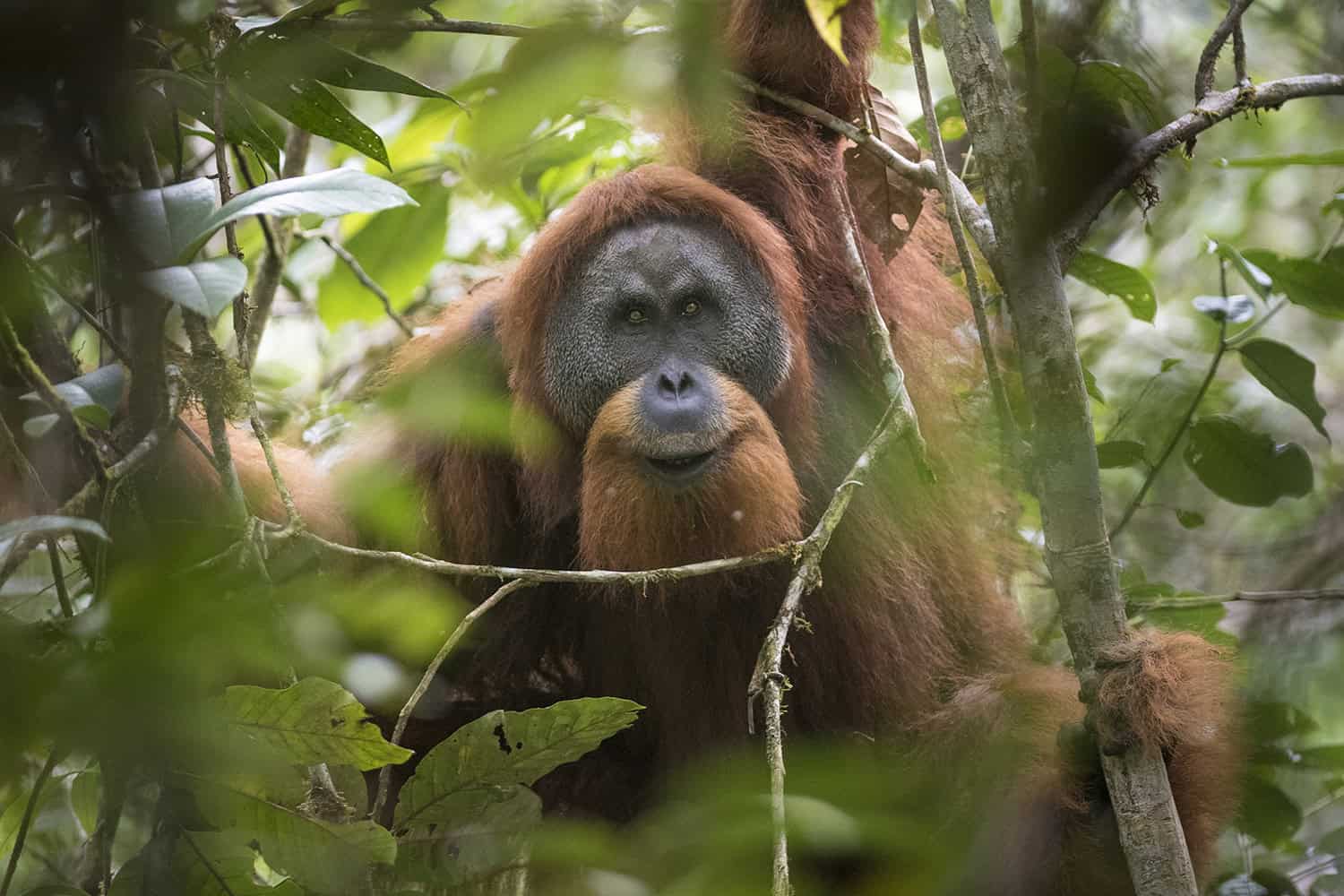
The rare Tapanuli orangutan has not been seen since Cyclone Senyar hit Sumatra in late November. Scientists fear that around 4% of all Tapanuli orangutans have died, which could have far-reaching consequences for the species’ conservation.
Experts fear for the world’s most endangered great ape, the Tapanuli orangutan, which lives on the Indonesian island of Sumatra.
On 25 November, Sumatra was hit by a devastating cyclone that caused severe flooding and landslides. Since then, the rare species of orangutan has not been seen in the Batang Toru region, home to most of the Tapanuli population, according to the BBC.
This silence has led experts to fear that many of the endangered Tapanuli orangutans have been wiped out by the floods and landslides.
“Because the Tapanuli orangutan lives in so few places and there are so few of them, a disaster like this could have far-reaching consequences for the survival of the species” says Marie Sigvardt, director at Save the Orangutan.
Read more about the orangutan species
Habitat destruction caused by the disaster
The heavy rains at the end of November have caused hundreds of people to be reported missing, nearly a thousand people have died and many villages have been destroyed.
Vast forest areas have also been destroyed, which has consequences for wildlife. Orangutans and other primates are particularly vulnerable because the mountainous area where they live has been hit especially hard. Parts of their habitat have simply been washed away.
Indonesian aid workers have found the body of an orangutan, sadly confirming that not all Tapanuli orangutans managed to escape the area.
“We know that this disaster has had absolutely terrible consequences for the local population. However, we do not yet fully understand what it means for wildlife, particularly the orangutans. We are therefore extremely aware of the announcements being made about the Tapanuli orangutan,” says Marie Sigvardt.
Fears that 4 percent have died
The Jakarta Post reports that scientists have analysed satellite data over the Batang Toru region following the disaster. In the West Block, where most of the orangutans live, it was estimated that 581 Tapanuli orangutans were alive before the disaster struck. Scientists now estimate that more than nine percent of the habitat has been destroyed here.
“We believe that between six and 11 percent of the orangutans have been killed,” said Professor Erik Meijaard, as quoted in The Jakarta Post.
The Tapanuli orangutan species was first discovered in 2017. Even then, only around 800 individuals remained. If the scientists’ fears are correct, this means that we have lost around 4% of all Tapanuli orangutans.
However, there is still hope that some of the orangutans have escaped to safer areas.