Five months in captivity with an unhealthy diet have taken their toll on the orangutan infant, Roy. Now, the orphaned male orangutan has moved into Nyaru Menteng, where he can begin his journey back to the rainforest.
Not all rescued orangutans arrive to the rehabilitation centres undernourished. Roy, who is Nyaru Menteng’s newest resident, was the opposite: overweight and used to sugary treats after months in captivity.
Now, the two-year-old orangutan has been rescued and is staying at the rehabilitation centre, where caregivers and veterinarians are working to ensure he can regain his health and fitness so that he eventually can return to the rainforest.
Five months among humans
Little Roy was first discovered by a local resident who was out fishing. As the infant was seen alone without his mother, the resident took him home. Roy stayed there for approximately five months before eventually being brought to the city of Palangka Raya, where authorities were contacted.
On January 16, 2026, the Central Kalimantan Natural Resources Conservation Agency (BKSDA) responded to the report of the orphaned orangutan and immediately transferred him to the Nyaru Menteng orangutan rehabilitation centre. There, various health checks were carried out to assess his condition and treatment needs.
Upon arrival, Roy appeared to be overweight, with visible fat deposits under both armpits. This condition was caused by months of poor care and an inappropriate diet, which had included sweetened condensed milk and sugary fruits.
Roy was put on a strict diet
The issues with his food preferences became particularly evident when Roy refused to eat natural, mildly sour forest fruits. Later, he also developed diarrhoea, which again confirmed that his body was not at all used to eating what is otherwise completely normal for an orangutan.
To bring his weight down to a healthy level, the veterinarians put Roy on a feeding plan consisting of carefully measured portions and a wide variety of natural food.
At Nyaru Menteng, it is common that rescued orangutans need to be gradually reintroduced to the diversity of the Bornean forest diet: fruit, leaves, bark, flowers, and pith – helping them to develop the broad flavour tolerance and nutritional balance of a wild orangutan.
Active, agile, and full of energy
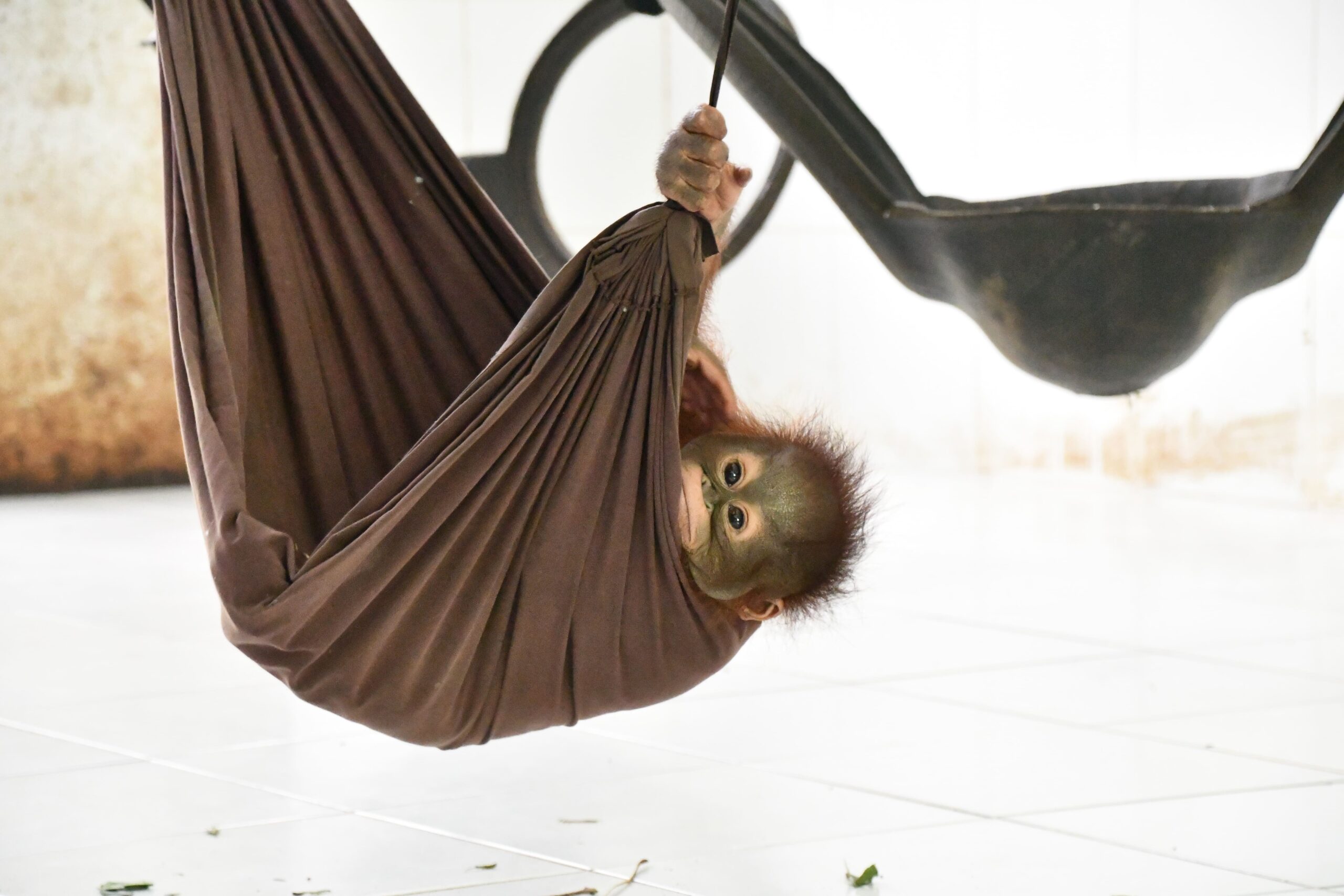
Despite his time in captivity, Roy is impressively active and very curious. Although still in quarantine, he spends much of his time climbing, exploring and using enrichment tools such as rubber tyres to improve his coordination and adaptability. Roy also shows independence. For example, he rarely wants to be carried and frequently takes off his diaper to move about freely. This is typical behaviour for young orangutans.
He keeps his keepers on their toes. There was, for example, one occasion during an outdoor play session when Roy was climbing from tree to tree with such enthusiasm that the keepers eventually had to intervene because he was venturing far too far away. Since this incident, all play has been restricted to the quarantine area until his health check-up is complete, to ensure the safety of both him and the other orangutans at the centre.
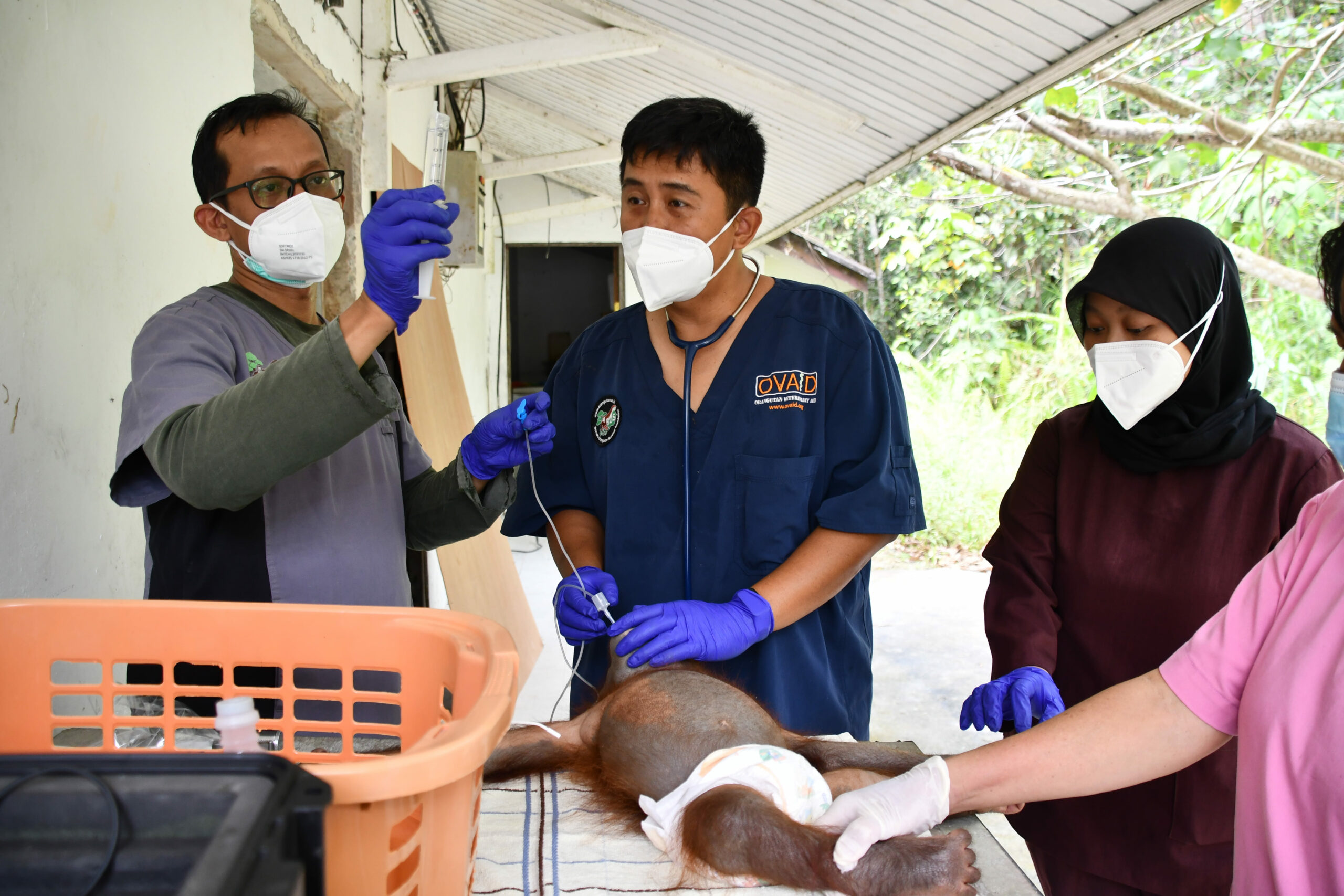
Roy is still undergoing health checks and receiving intensive care. Once the veterinary team gives the green light, he will join a small group of young orangutans to start forest school, where they learn essential survival skills.
Although he has several years of rehabilitation ahead of him, Roy now has something he didn’t have before: a real chance of a future in the rainforest.