Forest fires are currently raging across Borneo and are expected to continue for several months to come. The consequences are severe for both people and orangutans, making the work of the local fire patrols crucial.
Borneo is on fire.
Forests and land are burning, and smoke is slowly enveloping the island.
Every year during the dry season, Borneo’s rainforest is ravaged by forest fires, but this year the situation is particularly serious. This is due to the El Niño weather phenomenon, which is so strong this time that experts predict it will develop into what is known as a Super El Niño. This intensifies extreme weather in various ways around the world, but on Borneo it means drought. Severe drought. Consequently, it takes very little for a fire to start and spread.
In July, almost 95,000 hectares burnt down in Indonesia. The vast majority of this was in Borneo and Sumatra. The figures for August have not yet been officially calculated, but the non-governmental organisation YKAN estimates that as many as 600,000 hectares were burnt last month.
“The situation in Borneo is extremely serious. Although this happens every year, we are now facing a situation of a different magnitude. We fear it will escalate into a humanitarian crisis that is simultaneously a crisis for the animals in the forest”, says Marie Sigvardt, director of Save the Orangutan, and continues:
“The fires could have devastating consequences for orangutans, which are already critically endangered.”
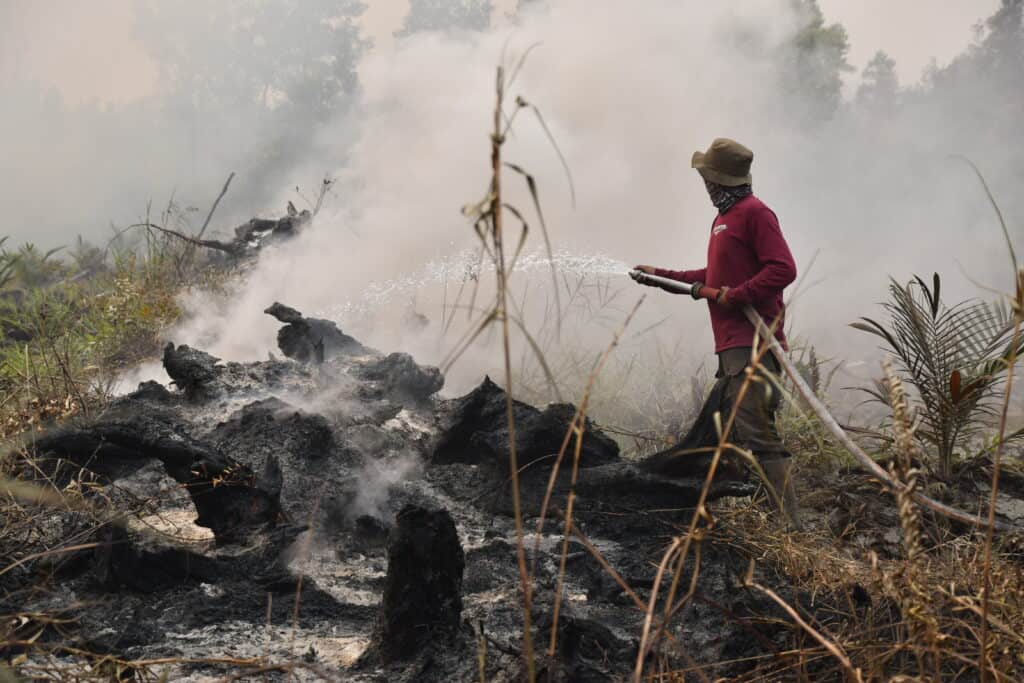
Local people are living amidst the smoke
The fires are having devastating effects. If you get caught in the flames – a very real risk, especially for many animals in the forests – it can be fatal. But the fires are also emitting huge amounts of toxic smoke – and that is precisely what poses the greatest risk right now. Air pollution levels must be monitored daily.
“On Borneo, you can see and smell the smoke all the time. What strikes me time and again is that local people are living in these conditions,” says Marie Sigvardt, who just returned from a visit to Borneo.
What is El Niño?
El Niño, which means “the boy child” in Spanish, is a natural climate phenomenon in which the ocean surface in the tropical Pacific becomes unusually warm. It affects the weather across large parts of the world. In Indonesia, it results in severe drought. The term “Super El Niño” is used to describe an exceptionally strong El Niño event.
El Niño occurs every two to seven years, and climate change intensifies the phenomenon’s effects.
Life must go on for the local population in the smoke that poses a serious health risk. New figures from Indonesia’s Ministry of Health show that the number of recorded respiratory illnesses in the fire-affected provinces has more than doubled in just over a week at the start of September.
Whilst the dry season and the fires usually last a couple of months, this time it is expected to continue into next year. This is a long period of severe exposure to smoke.
Read also: El Niño smolders – fire threatens orangutan forests
Orangutans are falling ill and losing their forest
The smoke does not only affect humans. Orangutans and other animals are also at high risk of developing lung diseases. Our Indonesian partner, the BOS Foundation, has, in collaboration with local authorities, drawn up a contingency plan to rescue orangutans from fires. This is the first collaboration of its kind.
At the same time, BOS is closely monitoring the orangutans at the rehabilitation centres.
“The fires could have catastrophic consequences for the species. We risk losing many orangutans to the flames and smoke, whilst those who are rescued may develop chronic respiratory diseases. When we lose large areas of forest, it has major consequences for orangutans, as the species depends on large, contiguous habitats to maintain its genetic sustainability,” explains Daniel Krejmar Nielsen, orangutan specialist at Save the Orangutan.
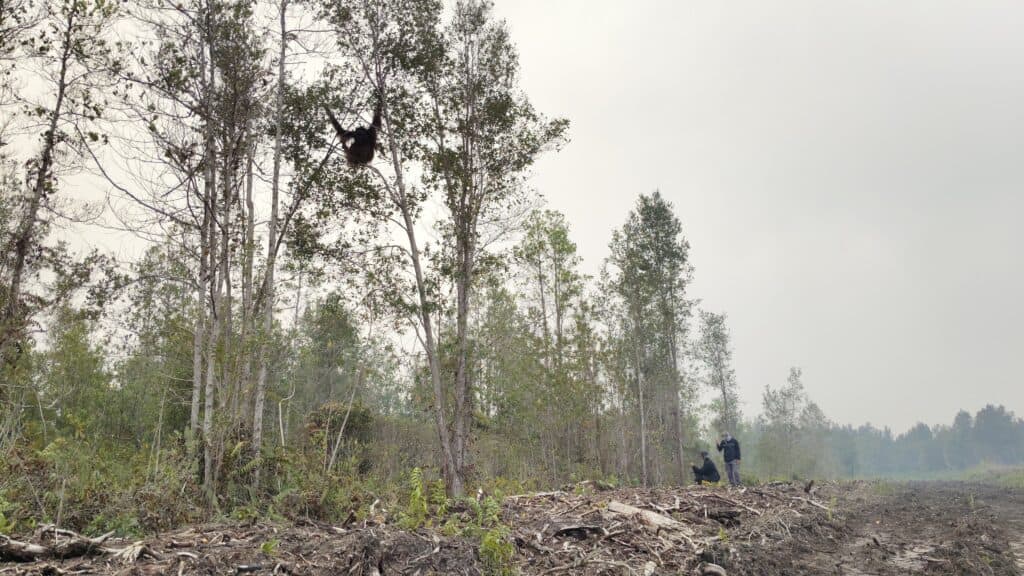
The vital work of the fire patrols
For months, we, our Indonesian partners and the local community have been preparing for the fires. Local fire patrols monitor new fires and extinguish any that break out – both in the areas around the centres and in the rainforest areas where we work. They also receive information from staff who use satellite data and drones to monitor potential fire hotspots. This makes a significant difference as it enables fires to be detected early and extinguished.
But fires are unpredictable. In Mawas, where we have been working for many years to restore and protect peatland forests, the situation is now critical. Drained peatlands burn easily and for a long time. Peat fires are particularly complicated because they spread underground, making them incredibly difficult to extinguish. The situation is being constantly monitored and patrols are being deployed where fires pose a threat.
There is hope, but we need your help. Support the fire-fighting efforts here.