Our Director, Marie Sigvardt, looks back on a year that included the opening of a new forest school, the full circle of rehabilitation and increased flood and fire preparedness.
By Marie Sigvardt, Director of Save the Orangutan
A new year has begun. It is a good time to pause, reflect, breathe and gaze towards the future.
I am incredibly proud of the results that we and our partners achieved in 2025. Much of our work is long-term, but when you look back, you can clearly see concrete results, important focus areas and how the organisation has evolved. Here, I will share some of these small and large victories with you, while also lifting the veil a little on what 2026 will bring.
We start at the Nyaru Menteng rehabilitation center, where Iqo, Onyer and all their companions had a very special year. In 2025, they moved to the new forest school at Nyaru Menteng 2. This new rehabilitation centre upgrades the facilities and provides the orangutans with even better conditions in which to learn the skills they need to survive in the wild. The orangutans will also benefit from an even greater focus on animal welfare, which is even more firmly rooted in new research.
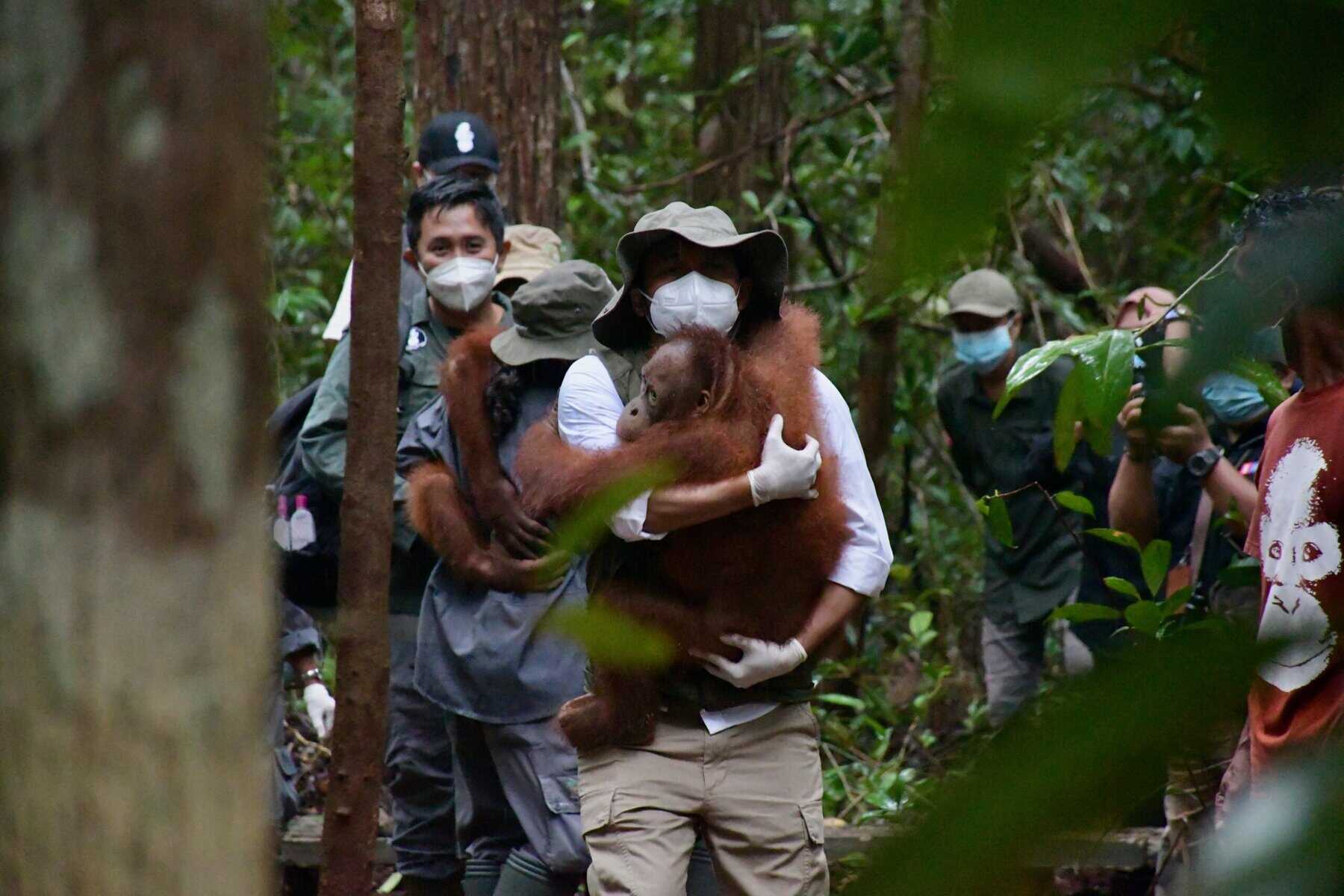
Thanks to the rehabilitation programme, our Indonesian partner BOS Foundation and the local authorities were able to release 17 orangutans into the rainforest in 2025, with our support. In total, 556 orangutans have now been released. This impressive result motivates us every day.
Also read: Seven orangutans returned to freedom
With so many orangutans being released and significantly fewer remaining in rehabilitation centres, monitoring the released orangutans will naturally take up more of our time in 2026. When an orangutan is released, we do not abandon it completely. Subsequent monitoring teams continuously observe how the released orangutans are doing.
The past year has also provided the basis for new insights into the rainforest. The collection of data on biodiversity, in terms of both what and how much, continues to be carried out in the areas where we work. This helps us demonstrate the impact of our work on animals and plants. This is very important to us at a time when the biodiversity crisis threatens up to a million species and the livelihoods of locals.
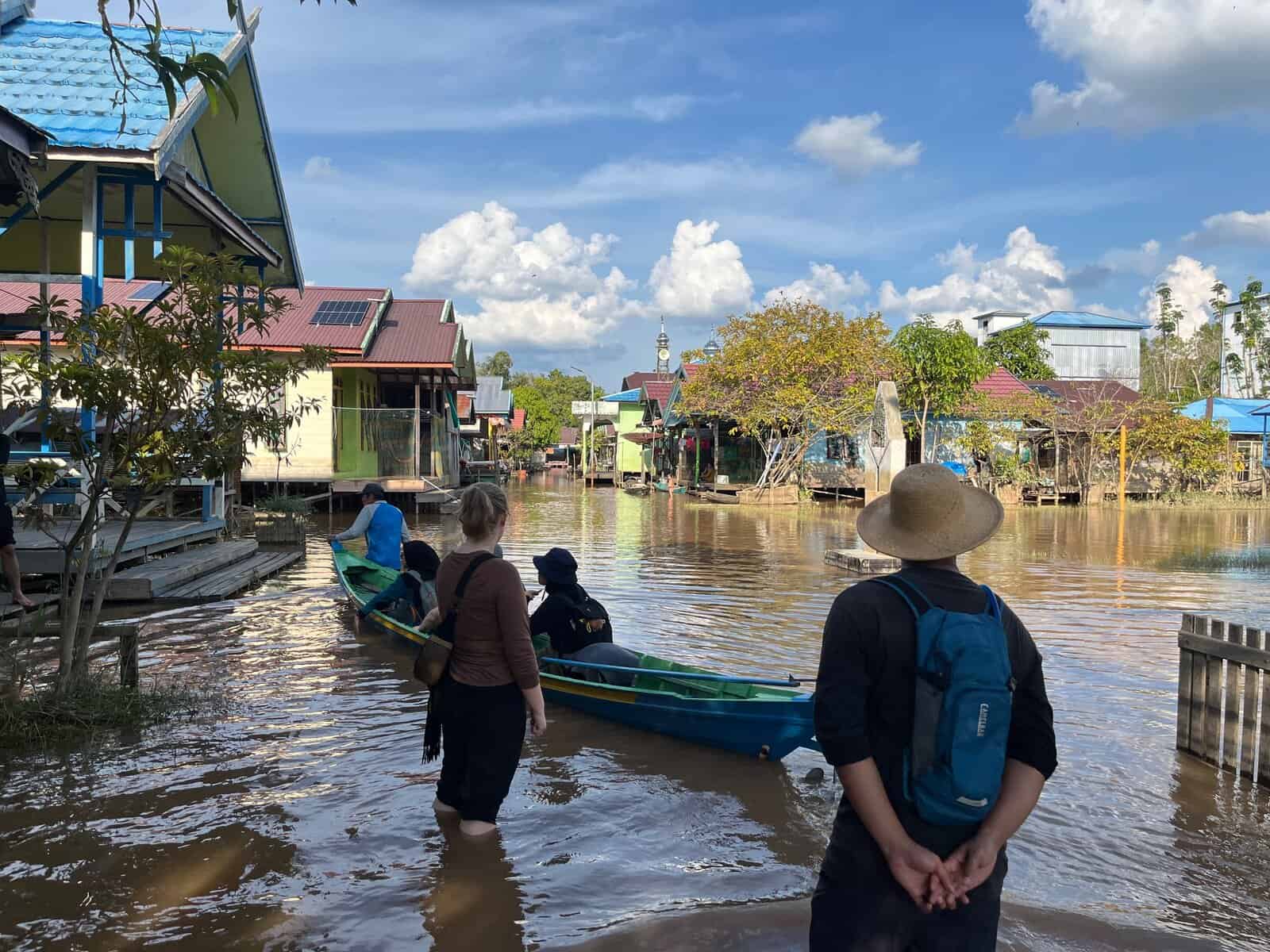
As you know, the biodiversity crisis is accompanied by an equally severe climate crisis. The consequences of climate change, natural disasters and extreme weather can clearly be felt in Borneo. In 2025, we saw how floods hit some villages so badly that boats had to be used to get around. Together with the BOS Foundation and collaborations in rural villages, we have improved preparedness and protection against floods, so that they are better equipped the next time extreme weather strikes. Fire prevention in the event of forest fires has also been greatly strengthened this year. These measures are important not only for the local population, but also for the forest and, consequently, for orangutans and other animals.
In 2025, our long-standing partner, the BOS Foundation, expanded its work areas to include parts of Sebangau National Park, home to around 6,000 wild orangutans. As our other partner, the Borneo Nature Foundation, is also active in the national park, we can now increase our efforts to protect this forest, home to the second-largest population of wild orangutans. We are incredibly proud to have such talented partners in Borneo who enable us to make a real difference.
Finally, I would like to extend a huge thank you to all our supporters, including foundations, companies and the many private donors who faithfully contribute to our work. Without you, we would not be able to lead the world in a better direction. We look forward to continuing this important work in 2026.
Regards
Marie Sigvardt
Director, Save the Orangutan