Heavy rains and widespread flooding hit Sumatra at the end of last year. The effects were worsened by extensive deforestation, which has severely weakened the ecosystem and the disaster struck hard against people, orangutans and other wildlife. Save the Orangutan contributed to emergency relief efforts to help the local population.
At the end of November 2025, devastating news arrived from the Indonesian island of Sumatra. Cyclone Senyar caused massive floods and landslides that swept away everything in their path – ancient trees, forests, animals, people, and entire villages.
More than 1,100 people were reported dead and many more remain in an acute humanitarian crisis without food or shelter. At the same time, the disaster has had a severe impact on wildlife, especially the critically endangered Tapanuli orangutan, which exists only on Sumatra.
“It is painful to see the consequences this disaster has had – and still has. We are thinking of the victims and closely monitoring the situation,” says Save the Orangutan’s Director, Marie Sigvardt.
The Tapanuli orangutan affected
Three regions of Sumatra were hit particularly hard. One of them is the Batang Toru region, where most of the approximately 800 remaining Tapanuli orangutans live. After the disaster, no orangutans were observed in the area, leading several experts to fear that the already critically endangered species had suffered severe losses. It is still unclear how many have perished.
“We are awaiting new reports that will show how much of the forest has been destroyed and give a clearer picture of the situation. Although it seems fewer orangutans died than initially feared, the disaster has had significant consequences for the species,” says Marie Sigvardt.
“When the emergency phase is over, thorough assessments will be needed to understand how the forest and wildlife have been affected and what can be done to reduce future risks.”
Recommended read: Concerns over the Tapanuli orangutan’s survival
The humanitarian situation remains serious
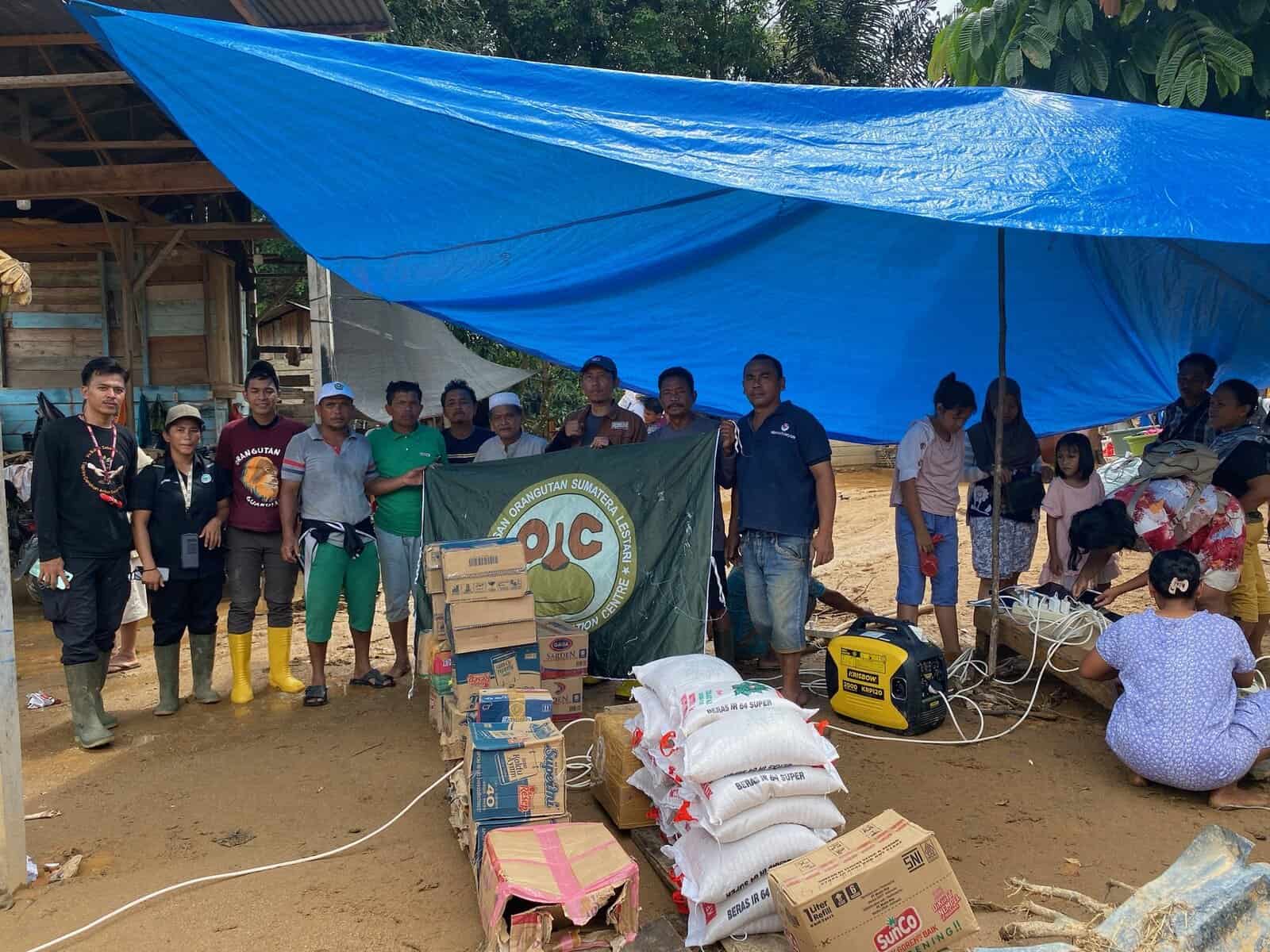
For the people in the three most affected regions, life changed dramatically in November. More than 1.2 million people were displaced from their homes and suddenly found themselves without a roof over their heads, food or family. The number of homeless people has decreased, but many still live under unstable and unsafe conditions.
“The situation remains serious. Our local partners report that many still have nowhere to live. Students are trying to continue their education from tents, and the anxiety about where the next meal will come from is ever-present. It is heartbreaking,” says Marie Sigvardt.
Local organisations shifted their priorities to focus on emergency aid and reconstruction. Authorities are still working to find solutions for those who remain homeless, as well as planning how future housing can be located outside high-risk zones to prevent similar tragedies.
With support from the Danish animal welfare organisation Dyrenes Beskyttelse, Save the Orangutan collaborates with the local organisation Orangutan Information Centre to provide basic relief to the affected communities.
The emergency assistance reduces the need for people to gather food and resources from the rainforest – a need that typically increases after major disasters. The humanitarian support therefore also indirectly helps ease pressure on the forest and its wildlife.
The rainforest’s weakened resilience
How does Save the Orangutan make forests more resilient?
The organisation works with local partners and communities on Borneo to build robust forest areas by:
- Replanting degraded natural areas
- Building dams that block man-made canals draining wetlands such as peat forests
- Patrolling forests to prevent illegal logging and fires
These are nature-based solutions to both the climate and biodiversity crises.
Extreme weather with deadly consequences has become increasingly common in recent years, partly as a result of the climate crisis. In November–December 2025, several countries in the region – Indonesia, Malaysia, Thailand, and Sri Lanka – were hit by severe flooding caused by Cyclone Senyar, which in total claimed more than 1,800 lives.
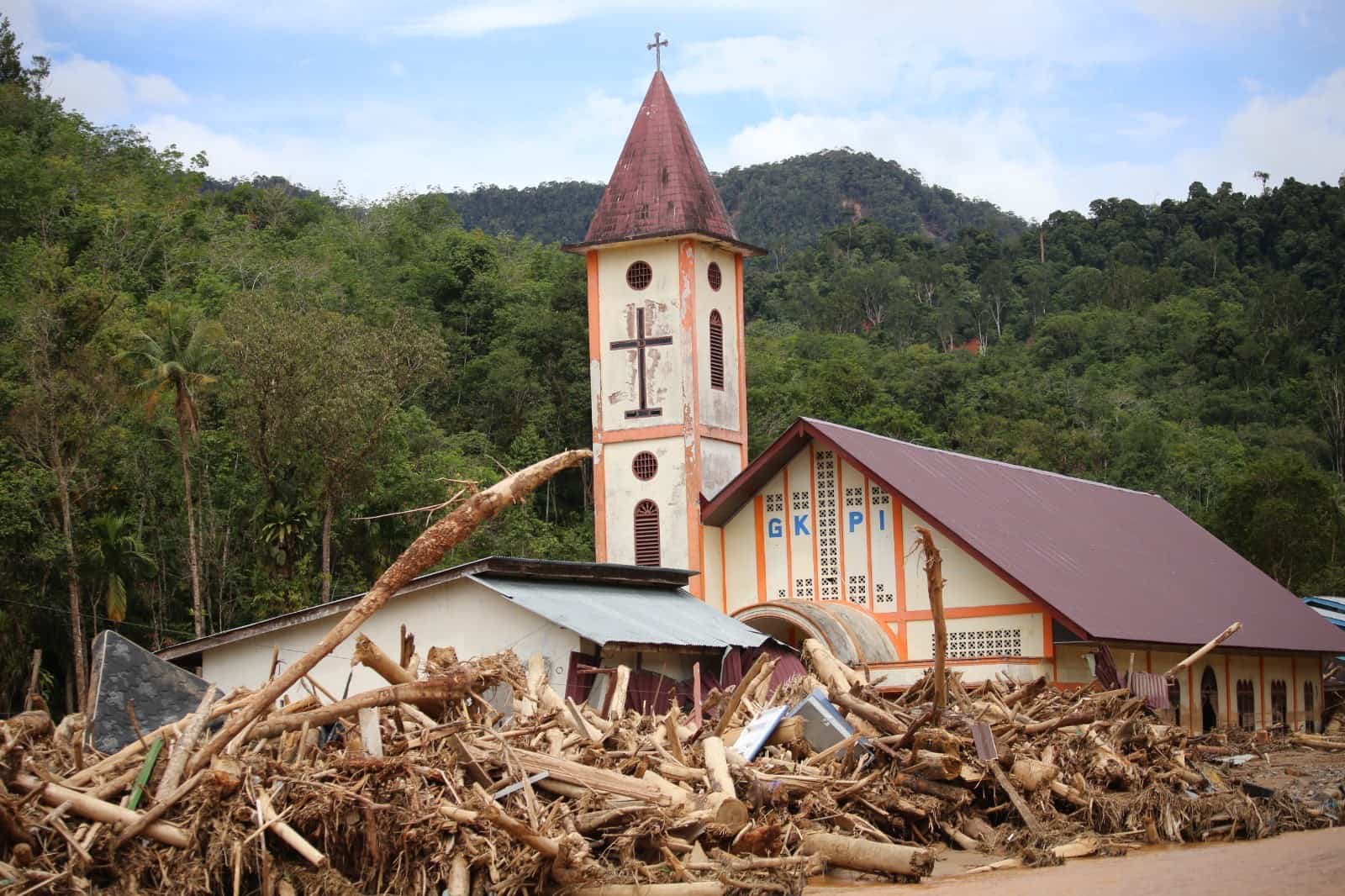
Sumatra was hit the hardest, however. Researchers and authorities emphasise that the massive destruction cannot be explained as a natural disaster alone — decades of deforestation have worsened its effects.
Normally, the rainforest soil works like a sponge, absorbing water. But when the forest is cleared — for instance, for mining or logging — this natural protective mechanism weakens. The soil loses its ability to retain water, resulting in floods and landslides.
Since 2001, Sumatra has lost 4.4 million hectares of forest.
Forest management saves lives
The disaster underscores how crucial it is to protect and restore forests. Healthy forests safeguard both wildlife and the people living nearby – and they save lives.
“When the humanitarian crisis is under control, it is essential to focus on reforestation and protection of the remaining forests – for both people and animals,” says Marie Sigvardt.
The Indonesian government now acknowledges that changes in the landscape have made the forests far more vulnerable. The government has therefore announced major investments in environmental measures and is tightening corporate accountability to prevent future disasters.
On Borneo, Save the Orangutan works with local partners to restore damaged forest areas. The goal is to rebuild habitats for orangutans and other species, while simultaneously strengthening the forests’ resilience against natural disasters and climate change.