A new study shows that the heavy rains and landslides that struck Sumatra in late 2025 cost the lives of 58 Tapanuli orangutans. This represents 7% of the species’ total wild population and could have serious consequences for its survival.
When Cyclone Senyar hit the Indonesian island of Sumatra in November last year, it brought four days of intense rainfall and severe landslides. Scientists and NGOs feared for the world’s most endangered great ape, the Tapanuli orangutan, which was suddenly observed less frequently.
Now, unfortunately, these fears have been confirmed. Shortly after the disaster, it was estimated that 35 orangutans may have been lost, but new figures indicate that a total of 58 Tapanuli orangutans have died. Given that the total population was only around 800 individuals, this means that 7% of the species has been lost in a single event.
“We have been anxiously awaiting these results for several months. The initial study already suggested significant losses, and now it turns out the number is even higher,” says Daniel Krejmar Nielsen, orangutan specialist at Save the Orangutan.
Also read: Status from a disaster-stricken Sumatra
Major consequences for a vulnerable species
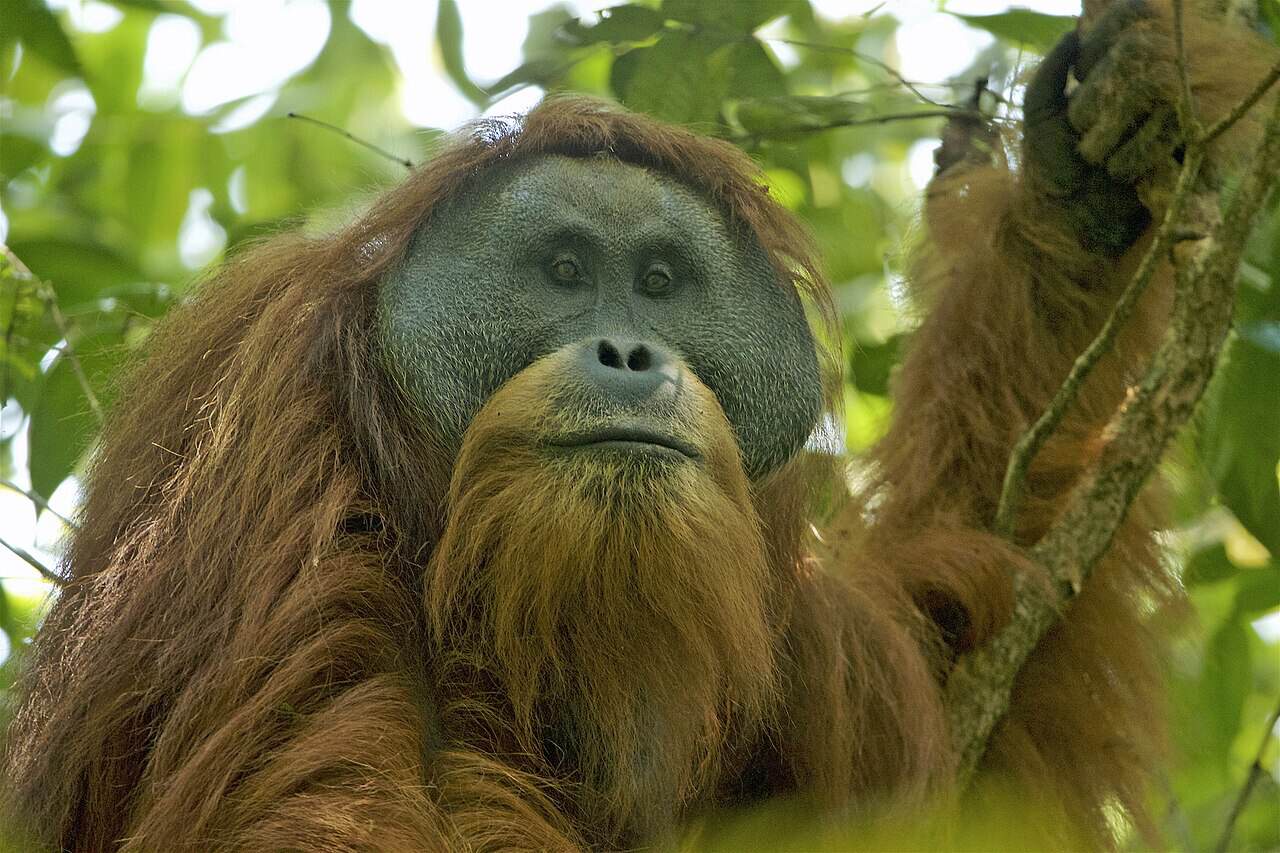
The Tapanuli orangutan is the world’s most endangered great ape and one of three orangutan species. It is found only in Sumatra’s Batang Toru forest, one of the areas hardest hit by the November 2025 disaster. Here, severe landslides destroyed large forest areas, and it was therefore expected that local orangutan populations would be heavily affected.
The new study is based on an ongoing “census,” allowing for more precise estimates of orangutan losses. These losses are tragic in themselves, but the death of 58 individuals also has significant implications for the species as a whole.
“The Tapanuli orangutan exists in only one location. With such a limited range, very little needs to go wrong before the species faces extinction. Losing 7% of the population is equivalent to six to seven times the annual decline the species can withstand—and it happened in just four days. This cannot happen many times before it’s game over,” says Daniel Krejmar Nielsen.
Support our work for Borneo’s rainforest.
There is still hope
Despite the concerning findings, Daniel Krejmar Nielsen believes it is still possible to reverse the trend for the Tapanuli orangutan.
“It’s not too late. For example, the mountain gorilla (Gorilla beringei ssp.) has seen its population increase over the past 20 years. The question is not whether it can be done, but what it will take to succeed,” he says.
Daniel highlights, among other things, the importance of involving local communities by providing sustainable livelihoods and enabling them to manage forest areas.
In addition, increased funding is needed to protect forests, reduce mining activities, and mitigate the impacts of climate change. These factors not only contribute to habitat loss but also increase the risk that extreme weather events, such as Cyclone Senyar, will have devastating consequences.
As the study concludes: “The crisis facing the Tapanuli orangutan illustrates the convergence of climate instability, biodiversity loss, and ecological vulnerability, underscoring the need for a coordinated response that matches the scale of the threat.”
The study is published in the scientific journal Current Biology.