The orangutans arriving at rehabilitation centres often suffer not only from physical injuries but also from emotional wounds and trauma that can affect them for years. The staff at these centres work tirelessly to help the orangutans cope and recover.
When we talk about mental health, we usually think about humans in trauma, grief, depression and healing. But what if we told you that orangutans can experience these things too?
Orangutans are not just wildlife or conservation symbols. They are intelligent, emotionally complex beings. Just like us, they can suffer from deep psychological wounds, especially when their early lives are shaped by violence, loss and separation.
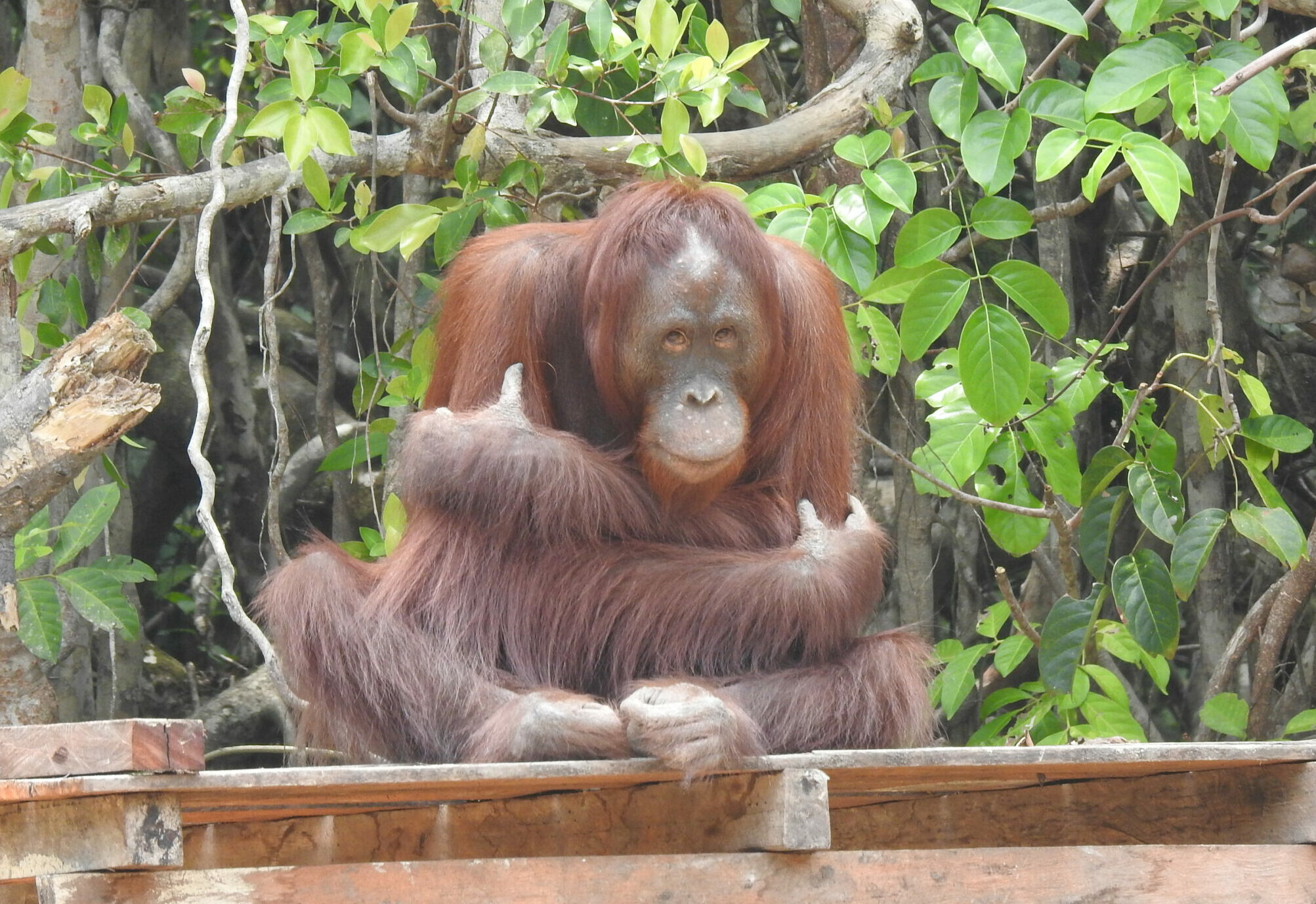
Losing the vital mother-infant relationship
In the wild, orangutans have one of the longest and strongest mother–infant bonds in the animal kingdom. For the first two years of life, infants are in near-constant physical contact with their mothers. They only gain full independence in movement at around 5–6 years old, and they can continue sharing their mother’s nest until they are 6–8 years old. Even at 11 years old, some have been observed returning to “visit” their mothers. This bond is everything. It is not only about learning how to climb or find food, but also about learning safety and trust as the foundation of their life.
Sadly, nearly all orangutans in rehabilitation centres were separated from their mothers at a very young age, most often as a result of the illegal wildlife trade – a process that frequently involves killing the mother to capture the infant. This sudden separation removes the young orangutan from its primary source of safety and learning process during their critical developmental period. Early maternal separation is therefore not only a physical loss, but also a significant psychological trauma.
Traumatic experiences from an early age
Maternal loss is not the only form of trauma experienced by rehabilitant orangutans. Some individuals arrive after being kept illegally as pets or exploited in entertainment settings, where they may have been forced to perform, exposed to loud and unfamiliar environments, or subjected to “punishment” during training. Others are survivors of forest fires, habitat destruction, or natural disasters that abruptly remove them from their homes. Although these experiences differ in context, they share a common consequence: prolonged stress exposure that can lead to fear conditioning, emotional insecurity, and disrupted behavioural development.
Studies also show that individuals separated too early from their mothers often grow up less social, less dominant and more affected by stressful experiences (Reimers, et al., 2007). Some may also develop unusual behaviours as coping mechanisms, which we commonly see in orangutan rehabilitation.
Sura’s cut fingers
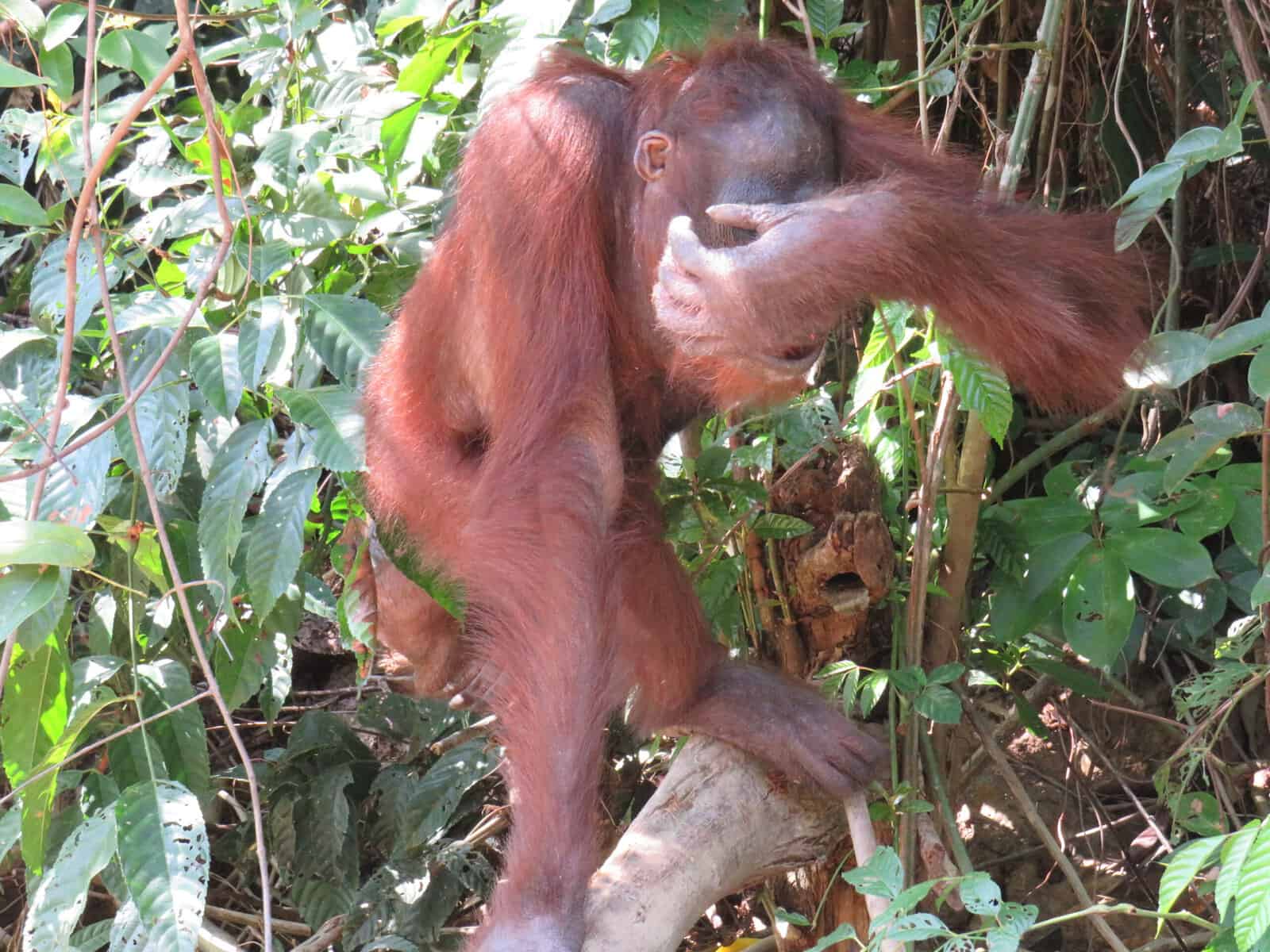
Sura’s story is one of those silent but powerful reminders. He was a baby male orangutan found in a concession area where trees were being cut down. A local resident kept him before finally handing him over to rehabilitation. When our veterinary team examined him, they discovered that three fingers on his left hand had been cut off. The wounds were open and appeared to have been caused by a sharp blade.
During quarantine, Sura would hold on tight to his babysitters. He often looked at his cut fingers, as if noticing or reacting to the injury. Today, Sura is a healthy, grown orangutan living on one of the pre-release islands. He has learned to climb again and adapted to both the forest and his injury. But he still shows one unusual behaviour: whenever humans call him, Sura often covers his face, appearing to avoid eye contact. This may reflect heightened alertness or a coping response formed during early distress. His body has healed, but his memory remains.
Mema hugs herself
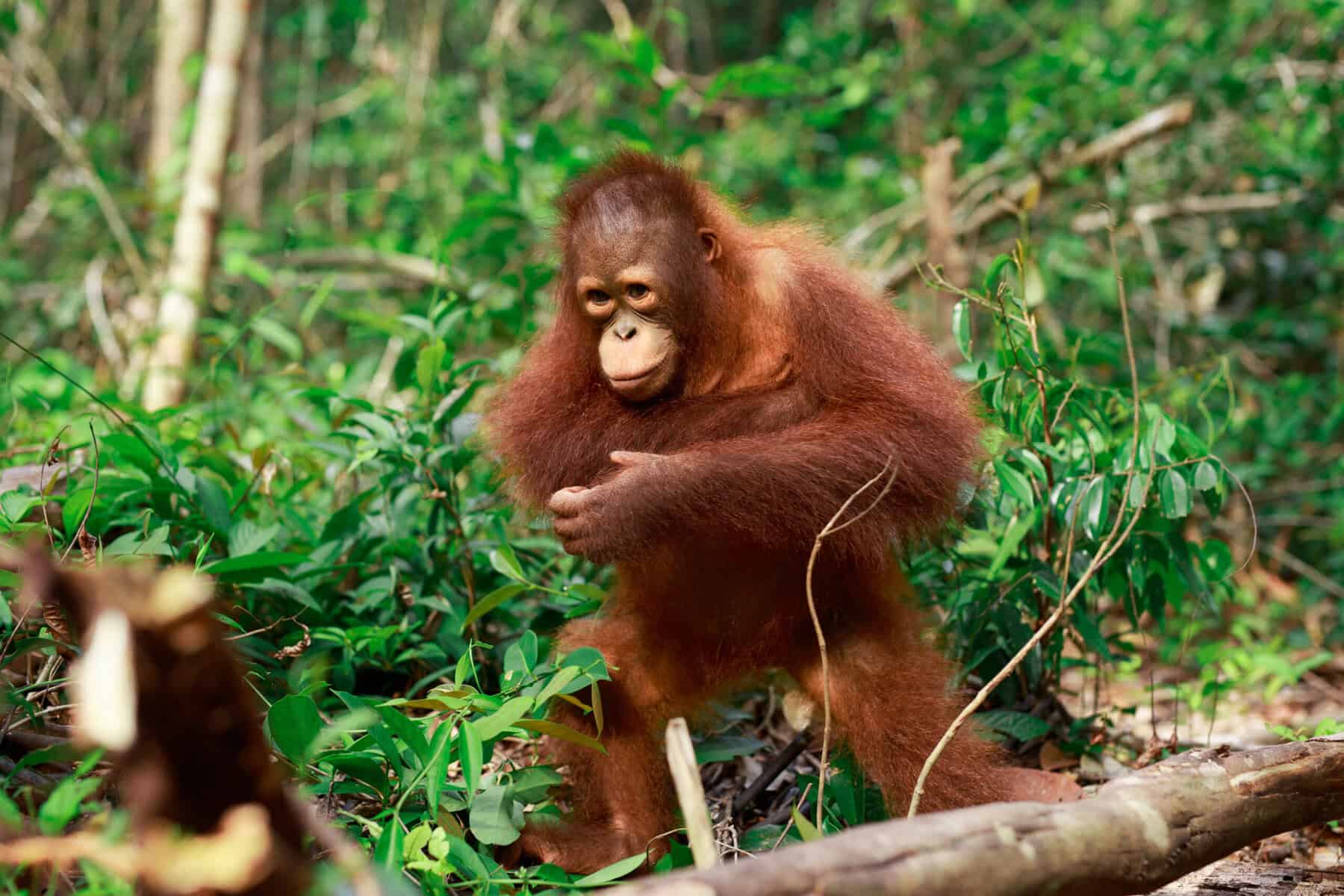
Mema, also known as Hope, was confiscated from a local villager who claimed to have come across her whilst searching for firewood in a burned peat area. When our veterinary team examined her, they discovered a wound on Mema’s right arm and small lumps on her torso and hip, suspected to be from air rifle pellets. Sadly, the discovery of these wounds indicates that Hope’s mother was more than likely shot and killed in the forest.
Til this day, one of Mema’s most notable behaviours is self-hugging. She often wraps her arms tightly around herself, especially during moments of uncertainty. Self-directed behaviours such as self-hugging have been described in primates as displacement activities, which are associated with internal emotional conflict and are commonly linked to anxiety or stress regulation (Troisi, 2002). Presumably, behaviours such as self-hugging may emerge as part of an individual’s attempt to regulate emotional discomfort in the absence of maternal contact, allowing individuals to restore a sense of calm in situations perceived as unpredictable or stressful.
Caretakers support orangutans in emotional recovery
Healing, however, requires more than just learning how to regulate alone. Social support plays an important role in reducing stress and facilitating emotional recovery (Bridgeland-Stephens, Thorpe, & Chappell, 2023). In rehabilitation settings, caretakers step in to recreate aspects of the maternal role, especially through consistent care, physical closeness and emotional reassurance. These interactions help re-establish a sense of safety for young orangutans who have experienced early disruption.
As individuals begin to feel more secure, they often become more willing to explore their surroundings, interact with peers and engage in learning opportunities. This growing sense of security allows orangutans to gradually build confidence and develop essential forest skills, such as climbing, foraging and problem-solving.
Emotional healing is crucial for development
The learning processes taught in rehabilitation are critical for survival in the wild but may be difficult for individuals still experiencing high levels of stress or unresolved trauma. Emotional recovery, therefore, directly supports behavioural development – preparing rehabilitant orangutans both psychologically and physically for eventual release.
Many people still do not realise that orangutans can suffer psychologically. We often focus on visible injuries, declining populations, and forest loss. But behind every rescued individual is a story of loss, fear, and hope. If conservation is truly about protecting life, it must include overall well-being. Sura’s strength and Mema’s quiet coping all remind us that orangutans feel deeply. Their scars may be invisible, but their stories are real.
References:
Bridgeland-Stephens, L., Thorpe, S. K., & Chappell, J. (2023). Potential resilience treatments for orangutans (Pongo spp.): Lessons from a scoping review of interventions in humans and other animals. Animal welfare (South Mimms, England), 32, e77. https://doi.org/10.1017/awf.2023.97
Reimers, M., Schwarzenberger, F., & Preuschoft, S. (2007). Rehabilitation of research chimpanzees: Stress and coping after long-term isolation. Hormones and behavior, 51(3), 428-435.
Troisi, A. (2002). Displacement activities as a behavioral measure of stress in nonhuman primates and human subjects. Stress, 5(1), 47-54.